

Lokmata Ahilyabai Holkar
The great heroic kings and queens of India came from various castes. A prime example is Lokmata Ahilyabai. She was born in Maharashtra into what is today considered a Dhangar Community. Due to her indomitable courage, valour, religious devotion, and sense of duty, she became a great ruler.
Chhatrapati Shivaji Maharaj established the Hindavi Swarajya. By providing an ideal of a welfare state to everyone, he expanded his Swarajya with his warrior companions. These companions included Shinde, Ghorpade, Nimbalkar, Dabhade, Gaekwad, and Holkar of Indore. The history of the Holkar dynasty is considered a significant period in the history of modern India. The Holkar princely state was a strong link and cornerstone of the entire Maratha sovereignty. In the history of the Holkar dynasty, the contributions of Malhar Rao Holkar and Ahilyabai Holkar are considered important. Ahilyabai’s reign is regarded as the
golden chapter in the history of the Holkar dynasty.
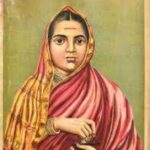
Despite being born into an ordinary family, Ahilyabai Holkar became the sovereign of the prosperous Holkar state. She was brave, a warrior, a skilled politician, and a ruler. She faced many difficulties in her personal life, but recognizing that her salvation lay in the welfare and service of her people, she dedicated her life to their well-being. By intertwining religious conduct with politics, she fulfilled her duties. Thus, today she is known not only as just a queen but “Punyashlok Lokmata Ahilyabai”.
Living a simple life and possessing a spirit of generosity, she established a distinct identity for herself. From Kashmir to Kanyakumari and from Dwarka to the eastern states, she built numerous temples, pilgrimage sites, inns, and wells for drinking water throughout the country. Ahilyabai is the only queen recognized across the nation for her charitable deeds, setting her apart from others worldwide.
In the history of India, many kings worked for the welfare of their subjects within their own state’s borders, but Ahilyabai was the only one who ensured the availability of drinking water beyond her own state throughout the country. While we can see that many royal families in India engaged in public welfare, Ahilyabai stands out as the sole ruler who assisted in the reconstruction of sites belonging to all religions and castes outside her own state.
Looking at Ahilyabai’s era, it appears that her greatness lies in her educational and progressive ideas. Most of what has been written about Ahilyabai portrays her as a religious woman engaged in worship and giving alms to monks. Consequently, her enlightened social thoughts and reformist decisions have been largely overlooked. During her reign, she implemented numerous reforms that were historically significant in their own right, such as secularism, the abolition of untouchability, social equality, religious unity, education for women, military training for women, the right for widows to retain property, the right for childless widows to adopt, prohibition of alcohol, anti-dowry legislation, and the strong opposition to old customs and traditions. Ahilyabai worked to eliminate caste discrimination and inequality, fostering unity between the high and low castes. She instilled confidence in the oppressed, distressed, and impoverished by providing them with support. Equality between men and women across all castes and tribes was Ahilyabai’s policy.
After the death of her husband Khanderao, Ahilyabai decided not to commit Sati at the request of her father-in-law, Malharrao Holkar. Her decision was motivated by consideration for her elderly father-in-law and the welfare of the subjects. However, she had to endure the social stigma associated with Sati for the rest of her life.
During Ahilyabai’s reign, the Bhil community often looted pilgrims traveling within her state’s borders and merchants conducting trade. To resolve this issue, she declared in her court that whoever successfully addressed the problem with the Bhils would be married to her daughter, Muktabai. A young man named Yashwantrao Phanse accomplished this task. Ignoring caste considerations, Ahilyabai arranged the marriage between Yashwantrao and Muktabai and personally performed Muktabai’s kanyadaan (giving away the bride). At that time, it was not socially acceptable for a woman, especially a widow, to perform a kanyadaan, but Ahilyabai openly opposed such wrongful customs. Taking such a step at a time when the caste system was deeply entrenched across the country was an act of great courage.
Ahilyabai, with her intelligence and skill, integrated the Bhil, Gond, and Ramoshi communities into the mainstream of society. These communities, lacking means of livelihood, often engaged in robbery and dacoity. Ahilyabai invited the leaders of these communities to her court and discussed their issues. She provided them with land for farming, alleviating their livelihood concerns. She also established checkpoints throughout the state and granted these communities the right to collect taxes from merchants and travellers passing through these regions. As a result, looting ceased, and peace was established throughout the state.
The era of Lokmata Ahilyabai Holkar can be considered a golden age of Indian culture. Her philanthropy reflects the unity of India. Through her welfare works spanning all directions— from Kedarnath to Varanasi and Somnath to Rameshwaram—she undertook the national task of binding India into a single thread. For this reason, she is also called the “Mother of the Nation.”
Especially in the Hindu tradition, it is often claimed by leftist historians and feminists that women in India had no rights and were perpetually subjected to immense injustice. Additionally, proponents of “women’s discourse” always uphold liberated Western women as the ideals of female empowerment. They never see purely Indian and towering figures like Rajmata Jijau Maasaheb or Lokmata Ahilyabai as examples of women’s empowerment.
It is important for every Indian and people around the world to know how Ahilyabai, enduring sorrows throughout her life with her virtuous and spiritual nature, managed to rule effectively and competently for thirty years. A queen envisioned and realized the concept of an ideal state, ensuring basic needs like food, clothing, shelter, and means of livelihood were available to the people, bringing happiness, peace, prosperity, and contentment. The reflection of Ahilyabai’s progressive and transformative ideas can be seen in many events of her life. In today’s era of instability and declining human values, the relevance of Ahilyabai’s principles is profoundly evident.
Vijendra Sonawane (vijendra.sonawane@ssfoffice.in)
Reference: खंड आठ: अहिल्याबाई होलकर- गौरवगाथा लोकमातेची- संपादक- डॉ. देवीदास पोटे